Lake County, Illinois
Drywall Repair in Lincolnshire, IL
Popped screws, split seams, winter ceiling cracks, basement water stains and remodel holes, repaired, copied to the texture around them and left primed for paint.
Lincolnshire damage, sorted four ways
Four kinds of damage, four pages. Find yours. Every one covers why it happens, the steps a sound fix takes, and the things that raise or lower the bill.
Can't tell which you have? Snap a picture and text it, or phone. We sort it out on that first conversation and get the right repair on the schedule.
Popped screws, split seams
Little blisters over fasteners and hairline splits down taped joints, reset and refinished flat.
Cold-month gaps over partitions
The cold-season split at the ceiling corner of an inside wall, finished so it can flex.
Soaked basement walls
Wet board removed after the leak gets fixed, then new sheets hung, taped and worked into the old.
Holes the remodel left behind
Openings from relocated outlets, swapped fixtures, pulled cabinets and plumbing access, closed flat.
Wall-repair beliefs that fall apart
- Any crack spells foundation trouble.
- Hairline cracks on seams and at the ceiling line often trace back to wood framing that shrinks in winter and fattens up in summer. Worry about one that grows month over month, runs on a steep diagonal off a door or window corner, and shows up alongside doors that rub their frames.
- Caulk settles a ceiling-line crack for good.
- Caulk stretches a little. A joint that lifts every winter stretches it past its limit and it tears. Repairs that hold up either free the ceiling board so it can ride with the framing or cover the gap with trim fastened to one surface only.
- A dab of spackle fixes a popped nail.
- Spackle over a backed-out nail pushes out again the next season. The old fastener gets set or pulled, a new screw goes into the stud beside it, and the spot gets coated, sanded and primed.
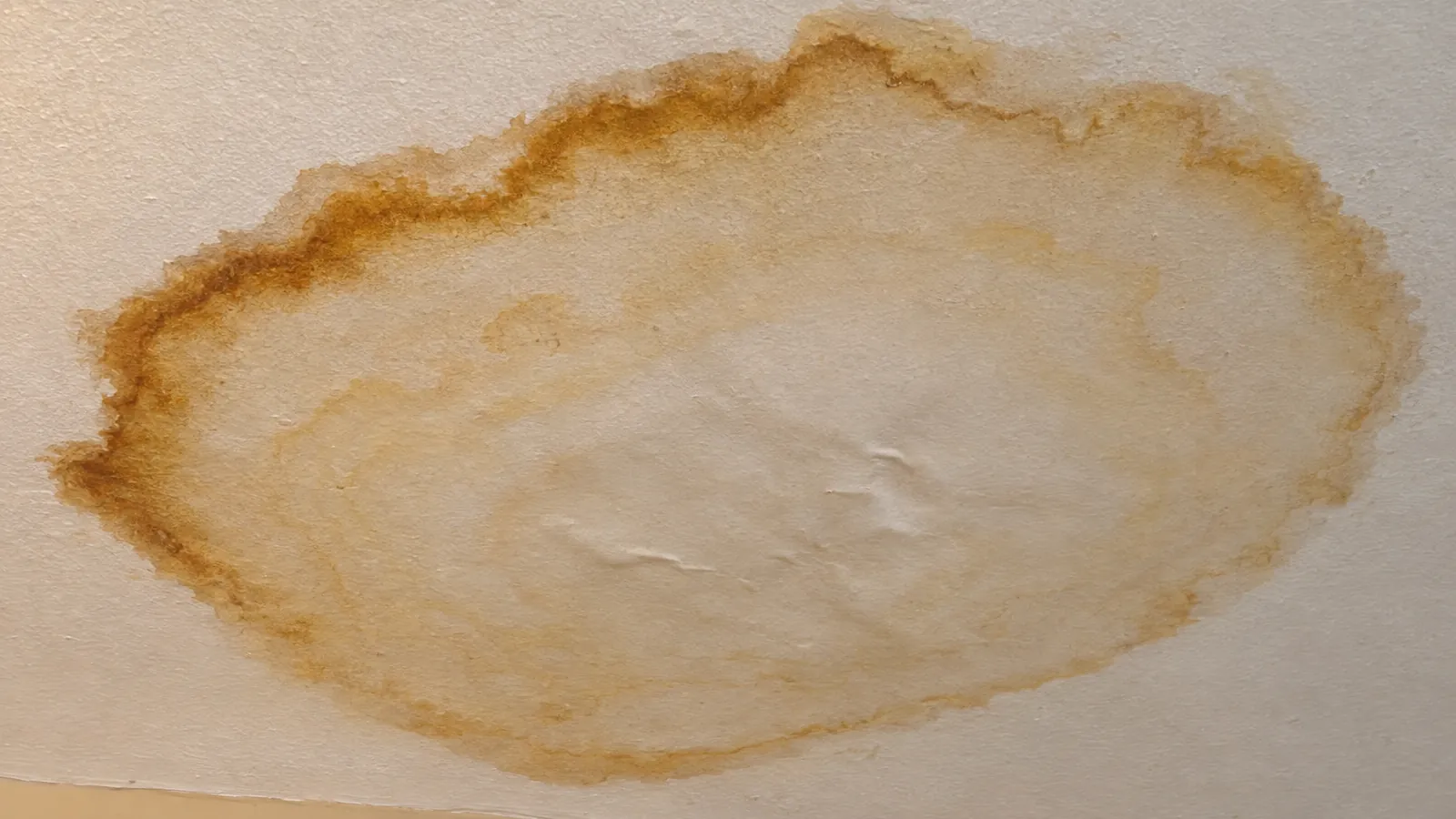
- Stain-blocking paint is all a water mark needs.
- Only if the board under the mark is bone dry and solid. Soft or crumbling board comes out first. Stain sealer belongs on the finished repair, where its job is holding back whatever ring is left.
- One small spot isn't worth booking.
- A single popped screw or one split seam is a normal job. Grouping several small spots into one booking spreads the trip and setup over all of them.
Four setups common in Lincolnshire-area houses
General patterns, not specific jobs. If one sounds like your place, bring it up when we talk.
A stairwell ceiling dotted with a row of pops
Fasteners backing out along one framing member, often after a dry winter. The fix: set or pull each one, add screws beside them, then three thin coats, sanding and primer over the row.
A gap over the hallway wall every January
The ceiling lifts off a partition when it gets cold and the corner tape pulls loose. The fix: cut away the torn tape, free the ceiling board near the wall if it is fastened too close, and finish the corner so the movement has somewhere to go.
The bottom of a finished basement wall soaked through
Water from a failed sump, a seepage path or a burst line wicks up the board. The fix: stop the source, remove board to a line higher than the water reached, dry the cavity, then hang, tape and texture fresh sheets.
Square holes after a kitchen update
Outlets moved, a range hood swapped, a cabinet pulled off the wall. The fix: square up each opening, add backing, screw in a cut-to-size square of board, tape it and copy the finish around it.
Pick the problem. The form fills itself in.
Step one happens here. Tap the closest match. Step two is the request form, preset to your pick. Add a line about the damage and send it.
Lake County weather and what it does to drywall
The Chicago region has a hot-summer humid continental climate: cold, snowy winters and warm, humid summers. That swing in temperature and moisture shows up on the walls.
January cold
Furnace heat dries the house out; studs and joists lose water content and contract slightly. Screws back out into round bumps. Tape seams open into hairlines. Ceilings under trussed roofs can lift off partition walls and leave a gap along the corner.
Thaw and heavy rain
Snowmelt and spring storms test basements and roofs. In July 2017, CBS Chicago reported the Des Plaines River four feet above flood stage near Lincolnshire, with voluntary evacuations and many flooded basements. Look for tide-line stains, swollen baseboards and soft board at the floor.
July humidity
Wood takes moisture back on and swells. Seams patched in January can show again. Damp basement air slows compound drying and gives mold a start on board that never fully dried out.
Ice at the eaves
Snow on the roof can melt, refreeze at the edge and back water under the shingles. That shows up as a stain along an exterior wall's ceiling line, often after a run of thaw days.
What Lincolnshire walls are made of
Houses from the village's growth stretch are gypsum board. Most wall sheets measure one-half inch. Ceilings get either a stiffer ceiling-grade sheet or five-eighths. Basements and bathrooms may use a moisture-resistant type. A patch is cut from matching stock, or packed out with shims, so its face lands flush.
Two families of compound do the work. Setting compound comes as powder; mixed with water, it cures by chemical reaction and fills deep spots with little shrinkage. Bucket mud from the store air-dries and sands easily, so it handles the finish coats. Paper tape is the usual pick for corners and seams; mesh tape shows up on flat patches under setting compound.
Texture decides whether a repair blends or shows. A sound repair copies the pattern around it, gets tried on a spare scrap before the wall, and feathers the edges wide so side light finds no ridge.
- SmoothFlat and even; any ridge or dip shows in side light.
- Orange peelFine, tight spatter, sprayed on and left to dry.
- KnockdownSplatter flattened with a knife into flat-topped islands.
- Skip trowelThin crescents skimmed on by hand, with gaps between.
- PopcornCoarse sprayed clusters, mostly on ceilings.
Popcorn and other sprayed ceilings in older houses raise one more question. The tips and guides section covers testing old texture before it is sanded.
Which repairs jump the queue
- Book soon
Ceiling drooping, maybe full of water
Step one: kill power to whatever fixture hangs in that soggy patch, at the breakers. Then nobody walks beneath it, a bucket goes down, and you phone. Waterlogged board weighs a lot and drops suddenly.
- Book soon
Basement board that is still wet
Board that stays wet gives mold time to start. The source gets stopped, the wet section comes out and the cavity dries. Booking the repair can follow once it is dry.
- Book soon
A crack on the move
Mark both ends in pencil, with the date. If it creeps past the marks or doors start to rub, an engineer should see it ahead of any patching.
- Can wait
Seasonal gap over a hallway wall
Cosmetic. It tells you the framing moves with the seasons. Book the repair when it suits you, and mention the pattern so the fix allows for it.
- Can wait
Single nail pops and hairline seams
No harm in waiting. Collect them, then book one trip, ideally before the room gets repainted.
Floors, vents and doorways come first
Carpet and couch protection
A proper job starts with plastic or canvas on the floor and furniture moved back or covered. Clear shelves and wall hangings near the repair before the booked day.
Registers taped shut
Sanding dust travels through ductwork. Registers near the work get taped over, and the furnace fan is best left off while sanding is under way.
Doorway seals
A zippered plastic wall across the opening holds dust in the room being repaired. Ask for one on larger jobs or in finished basements, where dust has nowhere to land but carpet.
Dust at the source
Big areas: a dust-extracting sander. Small spots: a damp sponge. Either one cuts fine dust way down. Raise it on the pricing call and the pro can say which method fits.
Lincolnshire and the villages that border it
Lincolnshire sits on both sides of the Des Plaines River, with Half Day Road crossing it east to west and Milwaukee Avenue running north to south. Bookings cover the whole village and the next ring of towns.
That covers Vernon Hills to the northwest, Buffalo Grove to the southwest, Riverwoods to the southeast and Bannockburn to the east, plus Deerfield, Long Grove and unincorporated Prairie View.
Each town gets a line of its own on the page of nearby towns.
Your move: call, or send it in
Tell us what broke and where. We line up pricing through an area pro, then slot the repair into a window that works for you. Curious how it all runs? The step-by-step on the about page lays it out.
You and the local drywall pro settle the price first; the calendar waits on your yes.